
Episode 10 | dibrokerWest Podcast with Guest Sheri Weber
Many banks no longer have in-house insurance departments handling larger or more specialized cases, yet their borrowers still need solutions. When a loan is large, personally guaranteed or tied to the earning ability of one person, the lender wants to know that the loan can still get paid if the borrower becomes disabled. In most cases, the loan officer has nowhere to send that client.
In this episode, Doug Lenhoff welcomes back Sheri Weber, Regional Director of Sales at dibrokerWest, for a different angle on bank loan disability protection: the business-building opportunity behind it. Sheri explains why commercial loan officers are an underserved referral source, the one question that opens the relationship and how a single well-handled case can turn an introduction into a referral channel with real staying power.
If you’ve been looking for a way to meet business owners at the moment they’re taking on debt, this episode shows how to start the conversation with the person who sees those loans first.
They have a problem advisors can solve. Many banks no longer have in-house insurance departments for larger or more specialized cases but borrowers still need solutions and the loan officer often has nowhere to send them. An advisor who fills that gap becomes a trusted outside resource rather than a cold referral request.
Business acquisitions, practice purchases, expansions, equipment purchases and refinances. Any loan tied to one person’s ongoing ability to generate the income that supports the debt can trigger the conversation and these transactions happen regularly in any commercial lending portfolio.
Ask one question: “When you have a high-value loan tied to one owner or key person, where are you sending that client for disability protection?” It’s simple and direct, and it positions the advisor as someone who understands the lender’s concern rather than someone just asking for referrals.
It shows the advisor understands the lender’s world. The concern is practical: if this borrower can’t work, how does the loan get paid? Asking in those terms signals that the advisor understands the lender’s risk, the borrower’s exposure, and why coverage often needs to be in place by the loan closing date.
That’s the opening. The advisor can offer to be that resource and then demonstrate it on the next case. One well-handled case builds more trust than any amount of relationship-building conversation, because the loan officer sees the process is clean and the client is taken care of.
It creates a new and reliable trigger for planning conversations. Every business loan, acquisition, expansion or practice purchase that moves across the loan officer’s desk becomes a potential entry point and the loan officer surfaces the clients so the advisor doesn’t have to go find them.
No. Bank loan disability protection is often the entry point but the business owner or professional on the other side of the transaction typically has other disability planning needs, including personal income protection, overhead expense coverage, key person coverage and buy-sell funding. The loan case gets the advisor in the room and the planning conversation expands from there.
Identify one or two commercial loan officers in your market, such as at a community bank, a regional bank or an SBA lender, wherever your business-owner clients are borrowing. Request a brief conversation, ask the question, and let the answer show whether there’s an opening. In most cases, there is.
dibrokerWest helps advisors position the concept, gather the right documentation, structure the policy around the loan terms and work through underwriting, while keeping the advisor at the center of the client relationship. Advisors don’t have to become disability specialists to have these conversations confidently.
Sheri Weber’s earlier episode, “Protecting the Loan: Why Business Debt and Disability Planning Belong in the Same Conversation,” covers how bank loan disability insurance works and how to structure a case. Together, the two episodes cover the product conversation and the relationship-building conversation.
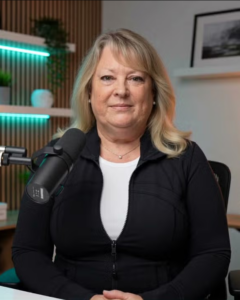 Sheri Weber brings more than 23 years of experience as a Sales Director at dibrokerWest, where her expertise centers on tailored solutions for disability insurance, life insurance and comprehensive business strategy planning for DI risk. A key focus of her work has been equipping agents with the knowledge and tools they need to address both individual and business planning needs, including bank loan disability protection and the referral relationships that make those cases possible.
Throughout her career, Sheri has been dedicated to supporting clients and teams alike and dibrokerWest has consistently contributed to addressing disability risk through strategic planning and thoughtfully designed insurance products. A commitment to fostering informed decision-making and ensuring security for businesses and individuals underpins every initiative she takes on.
| Time | Segment |
|—|—|
| 00:00 | Intro: Doug welcomes Sheri Weber back |
| ~01:00 | Segment 1: Why loan officers are an underserved referral source |
| ~02:45 | Segment 2: Opening the loan officer relationship |
| ~04:30 | Segment 3: What the relationship creates for the advisor |
| ~06:15 | Closing: The practical first step and how dibrokerWest helps |
Doug: What if the greatest financial threat to your family isn’t dying too soon but surviving an illness or injury without a paycheck? Welcome to the dibrokerWest podcast. I’m Doug Lenhoff and this is the show where we ask the question, but what if I don’t die?
If you’ve watched TV or streaming video lately, you’ve probably seen the commercial about the healthy young father who has a stroke, passes away and fortunately had life insurance. But that story overlooks a far more likely outcome, surviving the stroke with a disability that prevents him from earning an income.
So we ask again, what if I don’t die? Should income protection or disability insurance be one of the first risks that a young father or mother considers?
DOUG: Welcome back to the dibrokerWest podcast. I’m Doug Lenhoff, and today I’m joined again by Sheri Weber, Regional Representative with dibrokerWest. Sheri, good to have you back.
SHERI: Doug, always good to be here.
DOUG: Sheri, last time we talked about bank loan disability protection as a planning solution — how it works, who needs it, and how to structure a case. Today feels like a different angle on the same topic.
SHERI: It is. Today I want to talk about the business-building opportunity behind that conversation — specifically, how building a relationship with a commercial loan officer can become one of the most productive referral channels an advisor has. The product conversation and the relationship-building conversation are connected, but they’re not the same thing. And the relationship side is where a lot of advisors are leaving real opportunity on the table.
DOUG: Let’s start there. Why are loan officers such a valuable referral relationship for advisors working in the disability space?
SHERI: Because they have a problem advisors can solve, and most of them don’t have anyone solving it. Many banks no longer have in-house insurance departments handling larger or more specialized cases. But their borrowers still need solutions — especially when a loan is large, personally guaranteed, or tied to the earning ability of one person. The lender wants to know that if the borrower becomes disabled, the loan can still get paid. That’s a real concern, and in most cases the loan officer has nowhere to send that client.
DOUG: So there’s a gap in the lender’s process that an advisor can fill.
SHERI: Exactly. And when an advisor steps into that gap with a practical solution, they’re not just offering a policy — they’re becoming a trusted outside resource for that loan officer. That’s a fundamentally different relationship than a cold referral. The loan officer has a recurring need, and the advisor is the person who knows how to meet it.
DOUG: What kinds of loans create that need most often?
SHERI: Business acquisitions, practice purchases, expansions, equipment purchases, refinances — any situation where the loan is tied to the ongoing ability of one person to generate the income that supports the debt. Those transactions happen regularly in any commercial lending portfolio. And every one of them is a potential trigger for the disability conversation.
DOUG: For an advisor who wants to start building these relationships — how do you actually open that conversation with a loan officer?
SHERI: One question does it. “When you have a high-value loan tied to one owner or key person, where are you sending that client for disability protection?” That’s it. It’s simple, it’s direct, and it immediately positions the advisor as someone who understands the lender’s concern — not just someone looking for referrals.
DOUG: What makes that question so effective?
SHERI: It shows the loan officer that the advisor understands their world. The lender’s concern isn’t abstract — it’s practical. If this borrower can’t work, how does this loan get paid? When an advisor asks the question in those terms, it signals that they get it. They understand the lender’s risk, the borrower’s exposure, and the importance of getting coverage in place — often by the loan closing date. That’s a very different first impression than walking in and asking for referrals.
DOUG: And if the loan officer’s answer is “we don’t really have anyone for that”?
SHERI: That’s the opening. The advisor can offer to be that resource — and then demonstrate it on the next case that comes up. One well-handled case builds more trust than any amount of relationship-building conversation. The loan officer sees that the advisor can deliver, that the process is clean, and that the client gets taken care of. That’s what converts an introduction into a real referral relationship.
DOUG: Beyond the individual cases, what does a strong loan officer relationship actually do for an advisor’s practice?
SHERI: It creates a new and reliable trigger for planning conversations. Every business loan, acquisition, expansion, or practice purchase that moves through that loan officer’s desk becomes a potential entry point. The advisor doesn’t have to go find those clients — the loan officer surfaces them. That’s a meaningful shift in how prospecting works.
DOUG: And it opens up broader planning conversations once the advisor is in the door.
SHERI: Almost always. Bank loan disability protection is often the entry point, but the client on the other side of that transaction is a business owner or professional who almost certainly has other disability planning needs — personal income protection, overhead expense coverage, key person coverage, buy-sell funding. The loan case gets the advisor in the room. The planning conversation expands from there.
DOUG: So the loan officer relationship isn’t just a source of bank loan cases — it’s a source of comprehensive planning clients.
SHERI: That’s exactly right. And the advisor who builds that relationship positions themselves as someone who brings practical solutions to real business risks — not just someone who sells policies. That’s a very different and much more valuable advisory identity in the eyes of both the loan officer and the clients they refer.
DOUG: Sheri, for advisors who want to start building these relationships — what’s the practical first step?
SHERI: Identify one or two commercial loan officers in your market — at a community bank, a regional bank, an SBA lender, wherever your business-owner clients are borrowing. Request a brief conversation. Ask the question: “Where are you sending clients for disability protection on high-value loans?” Let the answer tell you whether there’s an opening. In most cases, there is.
DOUG: And dibrokerWest’s role in supporting that?
SHERI: We help advisors position the concept, gather the right documentation, structure the policy around the loan terms, and work through underwriting — all while keeping the advisor at the center of the client relationship. You don’t have to become a disability specialist to have this conversation confidently. We bring the expertise behind the scenes so you can walk into both the lender conversation and the client conversation with confidence. The lender gains confidence, the client gains protection, and the advisor gains a high-value referral channel with real staying power.
DOUG: Sheri Weber from dibrokerWest. Thanks for being on today.
SHERI: Thanks, Doug. Always a good conversation.